A Sociological and Historical Study on Earthquakes, Climate Crisis and Conspiracy Theories in the Century
Introduction:
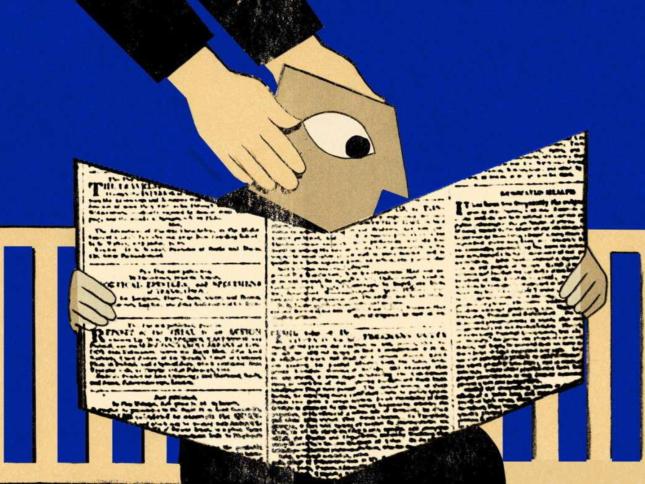
In the 21st century, there is a major contradiction between accelerating scientific knowledge and societies acceptance of knowledge, understanding process of knowledge. Even that all humankind history hosts different kind disasters and crisis, in our age even that developing early notice systems which warn about disasters and showing real affects: scientific knowledges refuse by some part of societies. This research shows that different science branches like Seismology and Climate Science can be very visible for this rejection of knowledge by society. Our argument is even that scientific data involved and spreading are increased, past religious and faithful disaster explanations evolved to foreign powers plans, aliens and climate crisis conspiracy theories. That mean against the scientific development resistance from society stayed same from the past.
In Sociological Perspective Knowledge, Society and Reality
Knowledge isn’t just a term affected by mind, it has also specialities that includes historical, and social story. According to Mannheim’s existential determination knowledge is about humans’ social existentialism, classes and cultural codes. In modern age knowledge society “like Morin’s said” not enough to transfer the knowledge to individual; İndividuals must be learn “nature of knowing and get rid of illusions” & “facing with uncertainties”(Öztürk & Aydemir, 2026). There are some details in the base of scientific evidence are rejected because of the belief of the conspiracy theories, who had power hierarchically can create cognitive beliefs because of the power goals “being sultan for ages, being king for ages” so people can listen their intuition before the evidence (Lipińska, 2022). In International place shocking incidents like big disasters can be create uncertainty and frightening and that can be led to create conspiracy theories. Instead of synthesizing rational information, people become more open to algorithm-driven disinformation by staying in their own “information bubbles”(Lipińska, 2022).
Is it Nature or Society?
In the past the disasters can be commented with “God Wants” or punishment of God which been deserved; people tried to protect themselves with rituals after these comments. However, disaster studies show that disasters are not just natural events; revealed that the real root of disasters is social conditions, poverty and inequalities that make people vulnerable to dangers. In the historical process, the disaster management cycles of societies (prevention, preparedness, response and recovery) have been shaped depending on their institutional flexibility and social resistance to external shocks. With the modernization process even that these religious explanations leaving its place to scientific control mechanisms still in disaster moments causes to affect societies psychology and resistance mechanisms continue to exist (Van Bavel, 2020. With the development of seismographs there was a great transformation in seismology with technological steps such as precise mapping of fault lines, the development of structural engineering and early warning systems. But when society reach the seismographs warnings in social media or new press tools; individuals didn’t take responsibilities of get ready for disasters. The masses, who feel helpless in the face of earthquakes with unexpected and shocking effects, tend to explain this situation with out-of-context conspiracy theories such as “qualified weapons” such as HAARP or “foreign powers” instead of explaining this situation with scientific fault movements. This situation is since individuals who believe in conspiracy theories create a different “social and factual reality” alternative to mainstream scientific explanations. Low trust in institutions and traditional authorities fuels the belief that there are hidden and powerful structures behind disasters, causing rational disaster awareness to be excluded from synthesis (Pummerer, 2022). Climate researchers didn’t take evidence in very long term of global warming data’s, modalizations and evidence of slow developing disasters. But climate crisis were not instant; it was slow process to investigate, and it leads place very easy to be creating perception management and disinformation. The results of climate research are labelled as a “global conspiracy” or “hoax” (hoax) fabricated to restrict people’s freedoms and ignored by a segment of society. Belief in such conspiracy theories weakens normative behaviours (e.g., tendencies to reduce carbon footprints) that depend on targeted scientific explanations and leads to non-normative behaviours by moving away from the scientific reality accepted by the majority. The “fatalistic” approach displayed in the face of natural disasters in the past has been replaced by a modern denial mechanism supported by perception management in the context of the climate crisis. The contents of conspiracy theories can be easily changed; A pandemic yesterday, a climate crisis today, a war tomorrow may be at the center of these theories, but the underlying cognitive denial process remains the same (Pummerer, 2022).
Conclusion:
To summarize: even that knowledge sources are developed and evolved technologically, in sociologically and psychologically resemblances have been stayed same in years. The great development of Climate and Earthquake sciences didn’t able break the wall of societies cognitive beliefs, being untrustworthy to institutions and existence of conspiracy theories. This demonstrates that the problem is not the lack of knowledge, but the social conditions under which knowledge is interpreted and trusted.
References:
Lipińska, J. (2022). Conspiracy theories as an example of disinformation in the network. Modern Management Review, 27(4), 19-25. https://doi.org/10.7862/rz.2022.mmr.19 Öztürk, E., & Aydemir, S. (2026). Considerations on the history and sociology of the information society. Veredas Do Direito, 23(4), e234933. https://doi.org/10.18623/rvd.v23.n4.4933 Pummerer, L. (2022). Belief in conspiracy theories and non-normative behavior. Current Opinion in Psychology, 47, 101394. https://doi.org/10.1016/j.copsyc.2022.101394 Van Bavel, B., Curtis, D. R., Dijkman, J., Hannaford, M., de Keyzer, M., van Onacker, E., & Soens, T. (2020). Disasters and history: The vulnerability and resilience of past societies. Cambridge University Press. https://doi.org/10.1017/9781108569743
// Yorumlar
Yükleniyor...