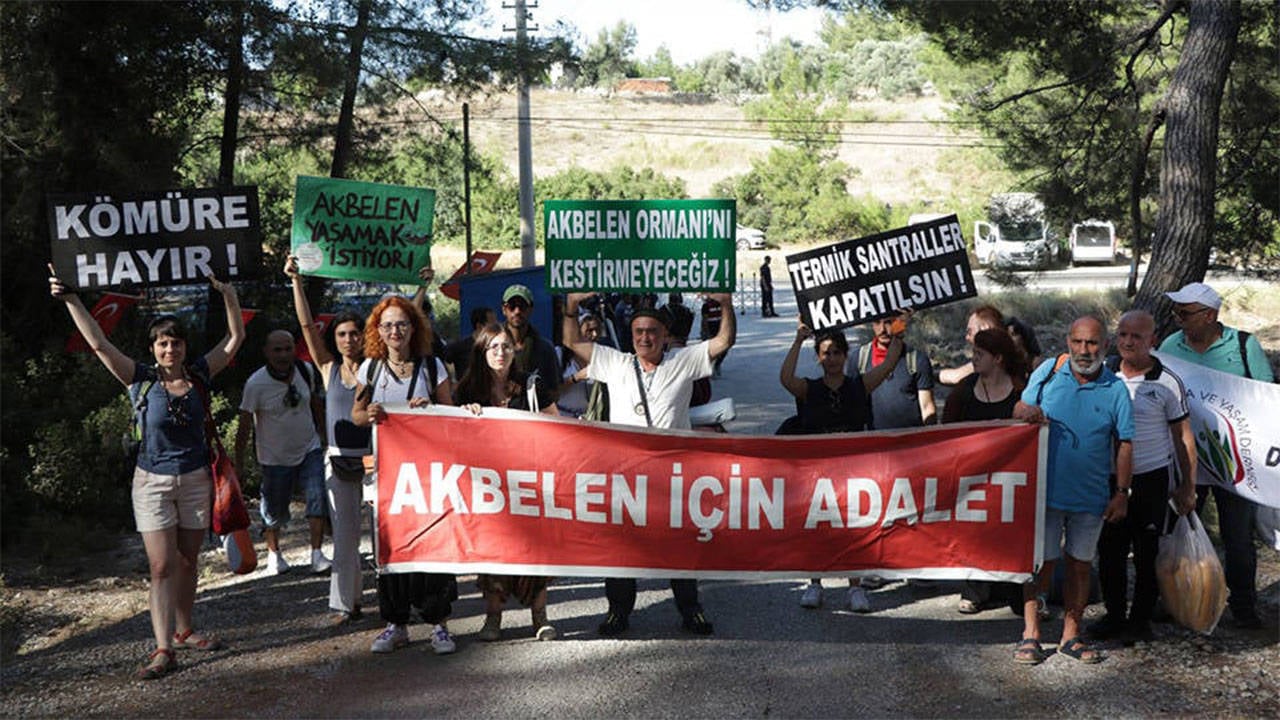
Algorithmic Power and the Depoliticization of Environmental Knowledge:
Introduction:
Today, access to information is linked to algorithmic systems thanks to the internet. While these algorithmic systems have made accessing information easier, they have also rendered it unreliable. This is because the visibility provided by algorithms may merely be an illusion. The fact that scientific facts are defined within academic frameworks does not limit their source; rather, digital platforms reshape them. The misdirection of many social movements through digital platforms and algorithms also stems from this. Current social movements—such as environmental, women’s, and LGBTQ movements—are highly exposed to misinformation. A prime example of this is the Akbelen Resistance. The epistemic injustice and algorithmic manipulation being applied not only prevent issues such as the right to energy from being presented within a framework of fair information production, but also distance scientific paradigms from democracy and harm environmental justice..
Theorization:
The determination of the algorithmic structures in question lies with corporations and the state, which paves the way for them within the capitalist system. With the advancement of digital technologies, control over the virtual world has become a bargaining chip in the hands of those in power. Foucault’s concept of the relationship between knowledge and power brings to light the connection between this concept of power and knowledge. Furthermore, the concept of surveillance has become the most functional structure of control mechanisms. Algorithms are not neutral; by restructuring the epistemic authority of knowledge, they highlight certain realities while rendering others invisible. The power structure that brought about this system views the steering of information as a more functional policy rather than merely supporting its production. With the advent of AI in our lives, the issue has shifted from the accuracy of information to how functionally it can be utilized, becoming a more critical point. Digital Governmentality defines the information produced by AI (information generated through scientific sources) as not merely neutral data processors but as a new regime of power that directs human behavior and reality through algorithms (Sreekumar & Balakrishnan, 2025). This evolutionary process can be easily explained through Kuhn’s concept of paradigm. In today’s digital age, it is evident that knowledge is not an absolute but a dynamic process. Paradigm shifts have transcended the realm of scientific production and have extended to platforms and data regimes (Hawkins, 2025).
CASE STUDY: Depolitization in Akbelen
The Akbelen Forest, located in the İkizköy neighborhood of the Milas district in Muğla, has become one of Turkey’s most prominent sites of ecological struggle in recent years. At the heart of this crisis lies a plan to expand a lignite mining area to supply coal to the Yeniköy and Kemerköy thermal power plants operating in the region. Activities carried out in these areas, which were allocated to a private company under privatization policies, have brought with them the threat of the destruction of tens of thousands of hectares of forested areas, olive groves, and fertile agricultural lands (Erkuş , 2025). Faced with this threat of structural ecological destruction, the local community has taken direct action to protect their living spaces. Led primarily by rural women—for whom the forest is vital to their livelihoods and cultural life—and with the participation of environmental activists and civil society organizations, a collective resistance has been organized. The protests launched in 2021 against logging attempts gained significant national and global visibility in the summer of 2023, thanks to the “nature vigils” (forest occupation/tent vigils) established in the region as logging operations accelerated. In this sense, Akbelen is not merely a tree-saving campaign; it is a profound defense of a living space where the local community—excluded from decision-making processes and facing the threat of spatial dispossession—demands environmental justice and energy democracy (Karakoç & Garipoğlu, 2025). However, despite its structural and political roots—such as the corporate-state relationships, capitalist energy policies, and the quest for justice underlying the resistance in Akbelen—this struggle takes on a different form when it moves to digital platforms. This radical reality on the ground enters circulation after passing through the filtering and reframing mechanisms (visibility, simplification, and emotionalization) of algorithmic systems. In particular, the attempt to depoliticize the ecofeminist resistance visible in circulation and reduce it to a narrative of passive victimhood, while emphasizing concepts like “apolitical,” has sought to shift the danger—which should be highlighted in terms of its nature—to another dimension through algorithms. The use of media as a tool to depoliticize ecofeminism, as detailed in the article by Karakoç and Garipoğlu, is thoroughly examined (Karakoç & Garipoğlu, 2025). The dramatization of social movements and the fact that the massacre was carried out by political actors clearly demonstrate that algorithmic structures and digital tools have transformed information into a functional propaganda tool focused on control rather than reality. Critically, this perspective may be positioned as exclusionary; however, the reality is that it facilitates the top-down dissemination of information and the suppression of grassroots movements by those in power. The exclusion of local communities, women, and activists from the production of information and decision-making processes leads to the one-sided (top-down) production of information (Erkuş , 2025).
More Equitable Knowledge Production Structure: Energy Democracy:
Instead of algorithmic monopolies and centralized state/corporate policies, a “Democracy of Energy” model must be established in which knowledge is generated from the grassroots up. The protest site in Akbelen is not merely a physical space of resistance; it is also a “commons”—a shared space for knowledge production where constitutional rights are affirmed, ecological knowledge is generated, and new decision-making mechanisms are tested. When algorithmic monopolies attempt to obstruct this focus on constitutional rights—which should be the citizens’ primary concern—a “reverse action” must be implemented. At this point, their own operational systems can serve as examples. First, since algorithms display information rather than produce it, visibility is the primary focus. Viral content represents this visibility. They then apply simplification. Rather than focusing on the fact that trees are being cut down to generate revenue for the company, they emphasize the phrase “trees are being cut down.” It has been observed that emotions are utilized as tools by those in positions of power within this system; consequently, creating drama has become a core strategy of these algorithms. “Crying women” and the ecofeminist activism they exhibit have been misrepresented as “what has become of our mothers” (Karakoç & Garipoğlu, 2025). This technical mechanism can be restructured and utilized to ensure citizens are aware of their constitutional rights regarding energy policies. Conclusion: Scientific knowledge is no longer produced; it is designed by the algorithms of platforms. This form of design is carried out in line with the interests of those in power. One of the most striking examples of this is the way the media was used during the Akbelen Resistance. Such structures are used to undermine grassroots social movements. To address this, decision-making mechanisms should incorporate not only centralized/algorithmic data but also local and traditional ecological knowledge (indigenous ecological knowledge) into scientific processes, thereby making scientific paradigms more inclusive. Adopting a grassroots model in knowledge production frees science from being confined solely to laboratories or state/corporate-backed reports; this allows the scientific paradigms Thomas Kuhn spoke of to shift toward a more participatory and ecological axis. When the equitable distribution of knowledge is ensured through structures such as citizens’ assemblies, energy cooperatives, and multi-stakeholder governance mechanisms, the political visibility of marginalized groups (such as rural women) increases, and social justice is established (Erkuş , 2025).
References:
Erkuş, H., Alkan, Y. S., & Tırış, G. (2025). Energy democracy, environmental justice, and the governance gap in the context of forest-based energy conflicts: The case of Akbelen Forest. Land, 14, Makale 1794. https://doi.org/10.3390/land14091794 Hawkins, J. K. (2025). In the age of AI: A new paradigm, a new consciousness. Nanoethics, 19, Makale 9. https://doi.org/10.1007/s11569-025-00473-0 Sreekumar, T. T., & Balakrishnan, S. (2025). Digital governmentality and the algorithmic state: AI surveillance in comparative perspective. Sanglap: Journal of Literary and Critical Inquiry, 12(1), 17–31. Yıldız Karakoç, D., & Kemahlı Garipoğlu, F. (2025). Akbelen’de kadın direnişi bağlamında ekofeminizm ve çevresel adalet: Eleştirel söylem analizi. Yönetim ve Ekonomi, 32(3), 425–456. https://doi.org/10.18657/yonveek.1687210
// Yorumlar
Yükleniyor...