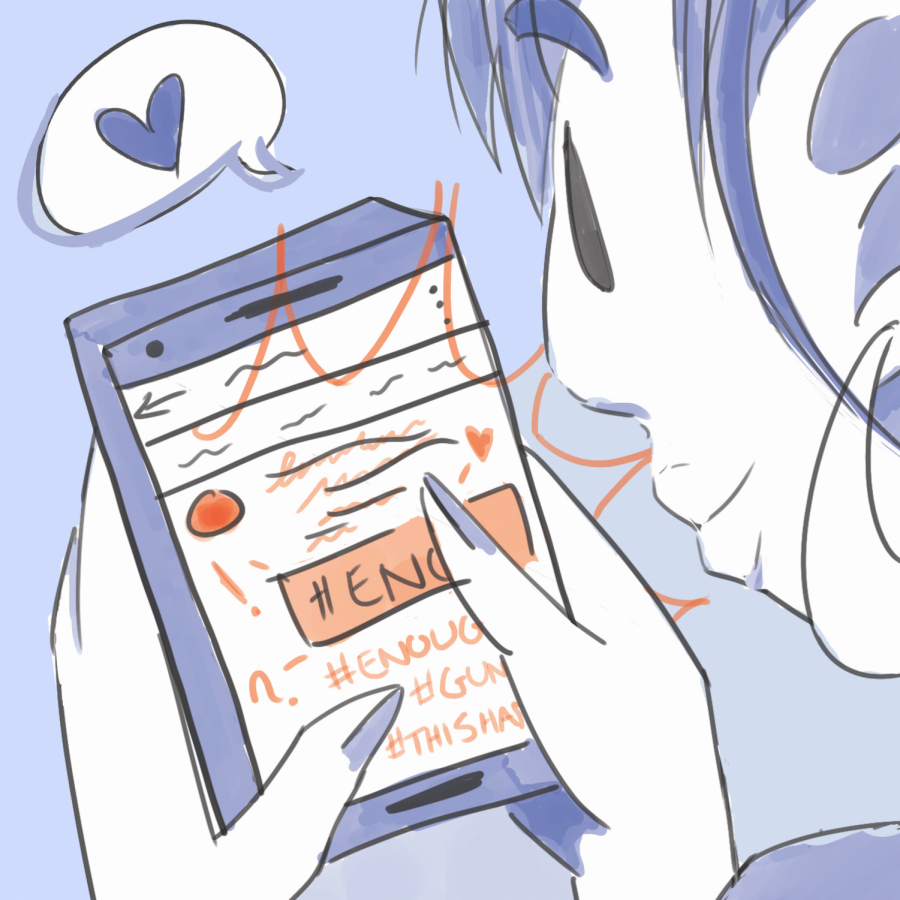
Digital Transformation Effect to Civil Society Resembles
Introduction:
Digital transformation significantly increased the capacity of civil society about fast communication, mobilization and visibility through social media platforms. But also created large surveillance system over to activists. While digital platforms have become powerful tool for civil society and creating public spheres and strength democratic participation; but they also give rise to made new forms of digital control and manipulation system. The main idea of this new public transformation was Castell’s “Network Society”. With the creation of “Web” the “Internet Age” affection of politics has been huge but also complicated. It produced new terms like “Networks” means, interconnection between humans and Internet places. Internet has facilitated the creation of occupied spaces, that the Internet allows movements to communicate the emotions of outrage and hope that are needed for switching from collective emotions to collective action and that contemporary social movements are online and offline socially networked movements for which social media are of crucial importance. Modern societies started to be organizing in the Internet because of these facilities, created spaces for example argumentative discussions like class inequality, capitalism, crisis. Internet age”, “Internet society” or “cybersociety” advances a media- and technology-centrism that ignores the multidimensionality of society, that we live in capitalist societies, information societies, hyper industrial societies, crisis-ridden societies etc at the same time. This kind of society change caused the rapid in the mobilization (questionable mobilization). Causes of being questionable is people criticizes that Internet being particularistic, interests and thus cannot hope to play a central role in mobilization. Luther Gerlach’s Segmentation, creating the module of moving structures and critise that Internet style mobilization.
Mobilization Discussion
Social media fasten the knowledge separation with social media. Espically knowledge about politics become known from the most wildlife places. This created public sphere that can people be political. One person can be political with sending e-mail, responding a article. It feeds communicative capitalism but also decrease time consuming. With that public sphere social media become place to show democracy. Even people said some metaphors like “Facebook Revolution” , “Twitter Rebellion”. It became first popular when the conservative blogger Andrew Sullivan’s claimed that the “revolution will be twittered” in the context of the 2009 Iran protests: “You cannot stop people any longer. You cannot control them any longer. They can bypass your established media; they can broadcast to one another; they can organize as never before. It’s increasingly clear that Ahmadinejad and the old guard mullahs were caught off-guard by this technology and how it helped galvanize the opposition movement in the last few weeks “. The rumours about social media can be used of control and oppression; and it criticize with the idea of long-term communication collectively couldn’t’ break with oppressive policies. The social movements become easy organize system in historical events like in Egyptian Revolution. Activist planned movements in Facebook organized with Twitter and spread with the SMS and create archive with Youtube. It resulted in street in the end “The Internet provided the safe space where networks of outrage and hope connected. Networks formed in cyberspace extended their reach to urban space” Digital public-sphere created and with the globalization it spread quick but in the meantime Institutionalization decreased because of the public’s trust disappear. Digital movements born because of the non-proficiency of institutions. Law makers, governmental powers, COP’s, NGO’Ss become isolated form public and public felt to create new public-sphere that can heard their voice. Then they starting to activism on social media. But there are various critics about it. In response to the techno-euphoria about social media, Malcolm Gladwell argued that activists in revolutions and rebellions risk their lives and risk becoming victims of violence conducted by the police or the people their protest is directed at. Taking the courage to face these dangers would require strong social ties and friendships with others in the movement. Activism would involve high risks. “The kind of activism associated with social media isn’t like this at all. The platforms of social media are built around weak ties. The term “slacktivism,” a combination of the words “slacker” and “activism,” has increasingly been used to describe the disconnect between awareness and action using social nicely to Habermas’ notion of the public sphere (Glenn, 2015). Students often debate if this increases voice and participation or decreases it through passive acts, such as “likes.” The open nature of the activity allows them to determine if new media advances activism or fosters “slacktivism” based on support they draw from the assigned readings and their lived experiences, further helping them make the connection between theory and application in contemporary forms of organizing for social change. To understand the nature of activism, Steven Lukes’ theory of power is taken as a basis: First Dimension: A making B do something he wouldn’t normally do (e.g., administrators restricting protest areas). Second Dimension: Maintaining the status quo by ignoring the demands of those in power for change. Third Dimension (Hegemony): Social structures and ideologies portray oppression as “natural” and limit options (e.g., neoliberalism excludes alternative approaches).
10 Pillars of Activism
The principles that distinguish real activism from slacktivism and that are offered for activists to engage in self-reflection are as follows firstly with collective bond, the one-man movement is not activism; the action must be deliberately connected to a larger group. Then secondly it comes with power using, an action that does not force the other party to react is not considered a show of force. Then it comes assuming media is a tool, eventually social media isn’t a goal, a tool used to gain power. After that behaviour orientation become important because activism isn’t just a identity also its continuous form of action and behaviour. All this kind of things comes with a risk and ıf doesn’t include risk its not activism its slactivism.It must be including hope, imagination, utopic vision. Activism is not a race for popularity; it is a job of creating social tension and causing discomfort. For this kind of acts there need to be supporters to help activist who didn’t want take risk directly: Most of those who support the movement (boycotters, etc.) are not activists, but part of the activist strategy. Lastly all this kind of thing made for democratic living wish. The Internet offers a more democratic space for “organic intellectuals” than the mainstream media.
This kind of Internet mobilization can be discussed with 2011 protests. Badiou sees 2011 as a year of social movement year, historically modern societies new revolution age starting. The year of liberal societies crashed and capitalism break out (Fuchs, 2012). However, it may be misleading to overemphasize the role of new media, as these platforms can also generate large-scale communities that facilitate the spread and reinforcement of oppressive ideologies. When such tendencies gain broader support, they may contribute to significant social and political consequences. In this regard, Benedict Anderson’s concept of print capitalism illustrates how media systems can shape collective identities, particularly by fostering nationalist perspectives that extend across generations (Khondker, 2011). One of the most important historically movement about Internet mobilisation was in Arap Spring. Tunisia, Egypt, Libya, Syria, Yemen and Bahrain were ready for revolutionary movement due to an assortment of politico-economic conditions. With successful or not in revolution, social networks were very effective for the movements in Arap Springs. The significance of the globalization of the new media is highlighted as it presents an interesting case of horizontal connectivity in social mobilization as well signalling a new trend in the intersection of new media and conventional media such as television, radio, and mobile phone. One of the most mobilization use was in anti-government protest used. Cyberactivism in Egypt had emerged since 2004 as it began to spread in other parts of the Middle East, marking the ushering of cyber-civil society, and a virtual replacement for the muzzled media. Sociological discussion on the potential of the new media in shaping society began in earnest with Manuel Castells’s ground-breaking work. Tunisian revolution spilled over into Egypt especially it shows that spreading can be easily with new media’s role. The revolution was labelled the Jasmine Revolution in part because it was not as violent as it could have been—as it unfolded in Libya months later. Given the dominant role of the new media, the Tunisian and Egyptian revolutions have been called Facebook or Twitter revolutions.
With the spreading of ideas geography become important Turkey influenced by Arab Spring and raised their own movement with the Internet. Turkish agenda and its effects have been felt historically. The protests, which rapidly spread throughout the country, were triggered by the proposal to recreate the Ottoman Army Barracks to function as a shopping mall on Gezi Park located in Istanbul’s Taksim neighbourhood despite the oppositions of several NGOs and when trees were cut in the park for this purpose. 2013 Gezi Park protests are one the biggest mass actions in Turkish history, like the 15-16 June worker movements or the 1st of May protests in 1977. Erdoğan governments were weakened cause of the policies about woman, LGBTQ, alcohol consumption and HES, banned theatres and people decided to that tree protest can be turned into anti-government social movement. Social media used effectively especially causes of non-objective press. CNN-TURK showed penguin documentary when Gezi Parkı Protest were occurring. Penguins become the symbol, but also classic media become untrustful and new media; social media became more reliable among protestors. Their resistance get stronger with the language using (Yılmaz & Yılmaz, 2015). From this aspect “new life” is crucial for the formation of the “new political language.” The young generation gathered in Gezi Park, used a language enriched with humour and satire so they were more “pleasant” in the eyes of the public, also they made their voice heard with the help of a smile. This was hopeful for the social factions, which were weary of discourse of classical politics. The prime minister at the time Tayyip Erdoğan coined the term “marauders” during Gezi Park incidents; these “marauders” rapidly drew both attention and sympathy from the world and the country because of their humorous way of voicing politics and creativity. The most infrastructural factor which fed Taksim Gezi Parkı Protests “spontanity” is social media. Social media used for communication in the begging but then it evolved to cyber- public sphere. Which Habermas and Arendth talked about: equal citizens criticize things with each other directly. Gezi were form of communal existence starting out in cyber space then transforming into real life flesh and bone. According to Hannah Arendt, political activity occurs when diverse, yet equal individuals gather in a shared ‘public sphere’ to shape their mutual life through dialogue and action. This framework of ‘political agency’ finds a significant historical reflection in the Taksim Gezi Park protests. As a first in Turkish political history, these protests embodied Arendt’s vision of a collective will formed by people presenting themselves to one another through active participation and debate.” Limits of Digital Mobilization: Occupy Wall Street One of the most effective usages of social media mobilization were in “Occupy Wall Street” with the other name “we’re %99”. It was the good example for networks are being the experience that Internet allowed the communicated and strengthen. According to Castells idea Internet communication generated street protests, then he generalised all movements: The networked social movements of our time are largely based on the Internet, a necessary though not sufficient component of their collective action. Often actual protests and movements are triggered and continuously intensified by certain events (such as the arrest of Rosa Parks in the US civil rights movement, the public suicide of Mohamed Bouazizi in the 2011 Tunisian revolution, the police’s killing of Khaled Mohamed Said in Egypt, the pepper-spraying of activists by NYPD officer Anthony Bologna and the mass arrest of Occupy activists on Brooklyn Bridge in the Occupy Wall Street movement, etc. Online tools that used in Occupy Wall Street was Hacker groups like Anonymous then blogs and social networking sites like Twitter and Facebook. Espically Twitter played important roles for creating shared language, purpose and identity., Occupy evoked interest from a highly interconnected community of users with pre-existing interest in domestic politics and foreign social movements. In addition to engaging with different content streams, users can interact with one another in two primary ways. A user can retweet content produced by another individual, rebroadcasting it to his or her audience of followers, or mention another user in a tweet, which functions as a publicly visible message targeting that individual. Also, Facebook used expansion Strategy: Local Focus: As of October 22, 2011, more than 400 unique Facebook pages have been established across the U.S. 324 of these pages are directly focused on local occupations. Engagement Data: The movement has garnered over 1.4 million “likes” and more than 170,000 active users through Facebook (Caren & Gaby, 2011). Spread Rate: The creation of new pages peaked in late September and early October (following the tear gas incidents on September 24 and the Brooklyn Bridge arrests on October 1). On October 11, Facebook activity reached its peak with 73,812 daily posts and comments.
Risks of Digital Activism: Canary Mission, Iraq War
The public mistakenly believes that governments which use oppressive methods to control their citizens through force and deceptive practices cannot employ public mobilization techniques. The traditional media channels and digital media platforms show that mass communication systems enable both empowerment and their function as tools for governmental control and public manipulation. The Iraq War provides a powerful example of this fact. The period shows how television news channels and newspaper publications were used to manipulate public perception because it existed before contemporary social media platforms became popular. Research shows a strong relationship between public wartime support and misperception. The three main false beliefs prevalent among the public were: the belief that Iraq possessed Weapons of Mass Destruction (WMD), the belief in a direct link between Saddam Hussein and al-Qaeda, and the perception that global public opinion supported the U.S. decision to go to war. Public opinion during the period between June and September 2003 showed that 30 percent of people held correct beliefs while 60 percent of people believed at least one false statement and 8 percent of people believed all three (Kull,Ramsay&Lewis,2003). The example shows that traditional media systems could create extensive false information which helped them build political support. Digital platforms started as new spaces to challenge centralized storytelling, yet their existence continues to present these dangers. The initial dangers have evolved into different forms. The creation of online blacklisting platforms like Canary Mission serves as one of the most dangerous aspects of digital activism. The platforms store and disseminate political speech which students and academics produce without providing context to create permanent online records that will impact their career and educational paths. Digital platforms serve dual functions because they enable users to gain power and they operate as systems that surveillance and control people. Digital media provides a solution to the restrictions of traditional media through its development of new public spaces, but these digital platforms create new power structures and make users more susceptible to danger. International students, including Turkish students, experience a chilling effect from this exposure because they begin to self-censor their political statements. The digital public sphere functions as a battleground which power dynamics control because it does not allow users to participate freely. The panopticon concept developed by Michel Foucault establishes a system which leads people to monitor themselves because they believe others are watching them. Digital platforms today operate as public spheres because they permit people to speak freely, yet they have become danger zones where public visibility results in disciplinary action. The network society concept which Manuel Castells introduced demonstrates that networked systems enable social movements to occur, but these same systems let authorities observe and control activist groups. Steven Lukes explains that the third power dimension allows domination through force, yet it restricts people from taking certain actions because it creates beliefs about reality.
Conclusion:
In conclusion, according to resources modern age activism performing is not just visible, on the contrary ıf this visibility without combining with physical power and risk could be “slactivism” non-effective pressure. Also, lead of medias affects to create surveillance space and become propaganda toll for oppressive governmental specialities can be causes of illusion before critical decisions like war. Social media can lead both; conscious organizing and creating democratic public-sphere with the increasing of mobilization or creating manipulative sources and new different digital power struggles.
References: Cabrera, N. L., Matias, C. E., & Montoya, R. (2017). Activism or slacktivism? The potential and pitfalls of social media in contemporary student activism. Journal of Diversity in Higher Education, 10(4), 400–415. https://doi.org/10.1037/dhe0000061 Caren, N., & Gaby, S. (2011). Occupy online: Facebook and the spread of Occupy Wall Street. SSRN. https://ssrn.com/abstract=1943168 Fuchs, C. (2012). Some reflections on Manuel Castells’ book Networks of outrage and hope. Social movements in the Internet age. tripleC: Communication, Capitalism & Critique, 10(2), 775–797. Khondker, H. H. (2011). Role of the new media in the Arab Spring. Globalizations, 8(5), 675–679. https://doi.org/10.1080/14747731.2011.621287 Kull, S., Ramsay, C., & Lewis, E. (2003). Misperceptions, the media, and the Iraq war. Political Science Quarterly, 118(4), 569–598. Yılmaz, S. H., & Yılmaz, Y. G. (2015). A look at the Gezi Park protests through the lens of media. International Journal of Humanities and Social Sciences, 9(8), 2824–2831
// Yorumlar
Yükleniyor...