
Sociological Perspective to Freud Series
Historical Context: 19th Century Vienna
The aim of this article is to ground the Freud series in sociological theories. To do so, it is essential to understand the socio-political characteristics of Vienna at that time. Along with the details at the beginning of the series, historical sources also agree that In the 19th century, Europe, Vienna, and the Austro-Hungarian Empire were known for their diverse social groups (Jews, ethnic nationalists, illegal organizations). The wars and turmoil involving the Austro-Hungarian Empire: The effects of the wave of nationalism brought about by the French Revolution began to appear in Vienna. Along with nationalism, anti-Semitism rose in Vienna in the 19th century. The pro-imperial stance of Jews living in Vienna angered nationalist, rebellious factions. Furthermore, in Vienna, where intellectual minds were frequently found, figures such as Schopenhauer, Nietzsche, and Wagner came together and produced works within a broad spectrum ranging from scientific materialism to philosophical irrationalism. Following these works, the conflict between scientificity and irrationality would gradually evolve into a crisis of “masculinity, liberalism, and rationality.” The conflict between positivism and irrationalism would be reflected in Freud’s work as a kind of synthesis. In the Freud series, we see the process of successfully bringing these two perspectives together, that is, how he developed the materialist subject-consciousness and irrational subconscious (hypnosis, hysteria, unconscious) approach, accompanied by a broad historical-sociological background. Given Austria’s current image as a small and peaceful nation and its recent history of neutrality, the emphasis on the violent past of the Habsburg Empire may seem absurd. Furthermore, Freud certainly does not display any Habsburg nostalgia; he does not emotionally glorify or romanticize the old royal family. While Emperor Franz Josef is generally remembered as a benevolent father figure who presided over the Empire’s final glorious years, in this series, his conservative policies are seen as the source of many problems. The Austro-Hungarian Empire and Emperor Franz Josef represent “traditional authority” in crisis, while rising nationalism and the chaos represented by “Taltos” are a nihilistic force challenging the existing order.
Rationalizing Madness
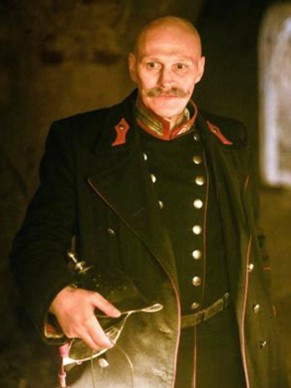
The conflict between scientific materialism and philosophical irrationalism directly corresponds to Weber’s theory of modernization. According to Weber, modernization is the process of science and rational thought replacing the religious and mystical, that is, the disenchantment of the world. In the series, Freud acts as an agent of this very process, attempting to ground phenomena considered “mysterious” at the time, such as hypnosis and hysteria, in a materialist and scientific foundation (psychoanalysis). However, sources indicate that when modern rationalization neglects human values and the search for meaning, processes of “re-enchantment” may emerge. The figure of “Taltos” and the occult rituals in the series can be interpreted as a reaction against the dominance of rational thought mentioned by Weber, a return of the repressed, or, in Ritzer’s words, an attempt at “re-enchantment.” Within this theoretical framework, the character of Freud can be positioned as a figure who attempts to build a bridge between the “disenchanted” (positivist medicine) world and the “enchanted” (Taltos/mythology) world, striving to rationalize the irrational (id/unconscious). The way psychiatric problems are treated in the series sheds considerable light on the historical process of madness. Trauma analysis symbolizes the process of madness’s transformation into a “medical object.” The series’ consistent treatment of Fleur Salomé’s nightmares as a pathological symptom visualizes the process described by Foucault of how madness was historically silenced. Madness: With the 19th century, it was transformed into a medical object under the supervision of psychiatry. In Foucault’s approach, the “voice of madness” (perhaps the voice of Taltos in the series or Fleur Salome’s nightmares) is silenced and replaced by psychiatry’s own forms of definition. In the series, Freud’s definition of Kiss’s trembling hand as a “war neurosis” or unconscious conflict strips madness of its mystery and turns it into an object of clinical observation. In this process, madness is detached from its social context and reconstructed as a biological or psychological pathology. In the history of psychiatry, while figures like Pinel are portrayed as “mythical” figures who freed the insane from their chains, in reality, a new form of power and surveillance was established. In the series, Freud’s efforts to ‘save’ his patients reflect this historical role of the “savior physician” in the psychoanalytic realm (liberating the unconscious). While Weber explains the structural consequences of rationalization, Foucault shows how this process establishes a regime of knowledge and power over individuals. He does this by explaining how power structures use surveillance to establish their own hegemony. Freud emerges here as a bridge. The task of Freud is defined by the rationality brought about by modernity and the proof of the existence of the stream of consciousness, which humanity has yet to discover; establishing it on a rational basis. Weber says that the modern individual is trapped in an “iron cage” of bureaucracy and rationality. The “hysteria” in the series can be theorized as a reaction of the bodies of individuals (Kiss or Fleur) trapped in this iron cage (social norms, aristocratic pressures, military honor). Throughout the series, Freud attempts to resolve the symptoms created by this “cage.” We also see a type of this hysterical structure in Freud’s conservative Jewish family. Their strong attachment to their religion shaped Freud’s desire to bridge rationality and the mythological dimension. In real life, Freud’s friends report that they came from a reformist Jewish background and never encountered conservatism, even saying that Freud made religious jokes. However, it is also known that in the 1870s, during Freud’s university years, he was exposed to intense anti-Semitism. As a result of all this, no matter how secular he wanted to be, he could not escape being part of Jewish culture, and this situation is constantly emphasized in the series. The Freud series successfully portrays an epic portrait of Viennese society.
Taltos
In any case, “Taltos” symbolizes nihilistic nationalists who seek to shape the world and the folkloric, mythological narratives that inspire them in this sense (later referred to by Jung and Adler as the “collective unconscious”) and feed and drive the primitive self within man. In this sense, in the Freud series, Hungary is where simple souls, archaic symbols, totems, animals, murders, and rapes are repressed; it is where Taltos resides. However, the series contrasts with the mythological narrative of the Hungarians. In Hungarian folk belief, Taltos is not an evil voice or mythological monster that drives people to murder, as in the series; he is a Hungarian shaman who was born with physical anomalies, such as teeth, and is considered the ‘wise man’ of the community. According to ethnographic data, Taltos are ‘chosen’ people who are fed milk and eggs, distribute healing to their communities, and protect the harvest by controlling the weather. The series’ Taltos represents Hungary’s suppressed anger and transforms it into a nihilistic force representing the ‘Id’; it is an illustration of how the Viennese mind, ‘bewitched’ in the Weberian sense, ‘othered’ Hungarian culture, which it perceived as Eastern and mystical. In reality, the Taltos fight other Taltos while in bull form during trance (ecstasy). The series takes this ‘fight’ motif and evolves it into a symbolic plane of conflict between Austrian authority and the rebellious Hungarian spirit.
Conclusion: Sociological Implications of the Freud Series
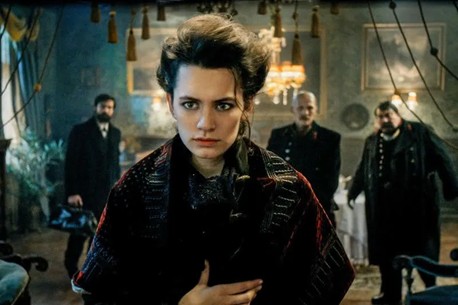
While the Freud series beautifully and meticulously depicts 19th-century Austria and Vienna, it also references the rise of liberalism and anti-global nationalism. By showcasing Austria’s occultist culture and solving mysteries with detective-like precision, the series proves itself not only an autobiographical series but also a suspenseful one rich in psychoanalysis and hypnosis. By combining the occult aspects of Austrian culture with the political climate of the time, it successfully reflects people seeking salvation from trauma. In doing so, we observe who Freud was, the basis for his ideas, and how this trauma was resolved.
Refrences:
Tobin, R. D. (2022). Habsburg Horror: Freud on Netflix. The Germanic Review: Literature, Culture, Theory, Vol. 97, NO. 3, 219–236. https://doi.org/10.1080/00168890.2022.2092389 Arslan, K. (2025). Yeniden büyülenen dünyaya Weber’in kavramlarıyla bir bakış. HUMANITAS – Uluslararası Sosyal Bilimler Dergisi, 13(26), 49–72. https://doi.org/humanitas.1581068 Uysal, B. (2025). Delilik ve psikiyatri: Tarihyazımında epistemolojik çatışmalar ve iktidar ilişkileri. Dört Öge, 14(27).