From the Client to Democratic Subjects
Introduction
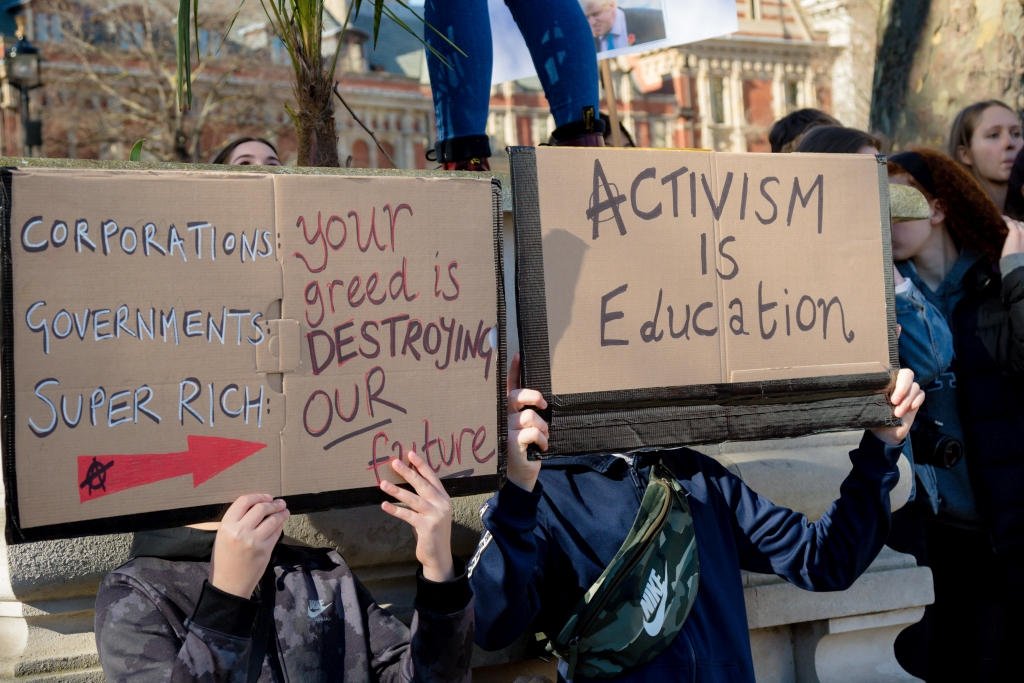
The boycott that began on March 19 at Başkent University’s campus was an effort by a group of students, including myself, to establish our own democratic agency. We faced security crackdowns on campus and the university administration ignored our demands. We had found that student clubs and existing representative mechanisms were insufficient in making our voices heard. During this process, I decided that if we were not given a legitimate space to speak within the existing campus boundaries, we needed to create our own public space. I launched a website called Coven Journal, a digital space for criticism. My platform was intended to offer criticism from a leftist perspective against the normalization of capital, patriarchy, and power relations. I told myself that the moment I sat down and published my first post on the site should not be just another ordinary moment of launching a blog. It was the point where I initiated my own agency by refusing to be passive, where my auto-ethnographic awakening began. On campus, these practices of micro resistance and organizing which I have personally experienced in the digital world have emerged as a result of the pressures of the higher education system. Henry Giroux has noted, neoliberal policies have stripped higher education of its status as a democratic public good. It has transformed it into a model that serves market driven values. In this process, universities have made efforts to prevent students from becoming critical thinkers and socially responsible democratic agents. They have turned students into consumers and transformed themselves into “Disneyfied” technical training centers. This neoliberal domination suppresses dissenting voices through disciplinary mechanisms and erodes the university’s mission as a democratic public sphere. Issue here is that neoliberalism has depoliticized universities. The aim of my study is to examine how one transforms into a democratic subject by rejecting the identity of the obedient customer an identity imposed even upon myself and creating a counter-public space through The Coven Journal. It was established in the digital sphere. Nancy Fraser notes, counter-publics are mechanisms through which groups excluded or marginalized in the mainstream public sphere express their identities and needs and participate. My research was prepared by transforming my experiences into a sociological object of analysis and employing a critical autoethnographic approach. My research will demonstrate how my activism shapes civil society from the grassroots level in opposition to neoliberal domination and facilitates social change at the micro level.
Methodology:
My study adopts a transformative research paradigm that centers on questioning power relations and domination within the neoliberal university system. I conducted this research guided by a political mindset that constitutes my own space of resistance. Carolyn Ellis’s method of critical autoethnography has been placed at the core of the study. I constructed my physical resistance during the boycott process and the virtual counter-public sphere I established afterward by reinterpreting the past through today’s sociological perspective. I am not merely a tool for collecting data. I am the data and the movement itself. The methodological answer to the question “How do I become the social movement itself?” lies here. The initiatives I took on campus and in the digital world in opposition to neoliberalism’s macro-structures that produce “compliant consumers,” demonstrate how my micro-political actions clash with macro-sociological structures. By transforming my own experience into an analytical object, I have modeled how civil society facilitates change starting from the smallest unit. 3.Data Collection and Ethics: The dataset for my research consists of my personal recollections gathered in a natural setting. WhatsApp messages during the boycott, photographs of the protests, and articles I published on The Coven Journal platform. While recounting my own story and commitment, I have ensured as a fundamental ethical responsibility of this research that the identities of other students involved in the process.
Theoretical Framework:
The political stagnation and apolitical atmosphere I experienced on campus directly align with Henry Giroux’s critiques of higher education. He emphasizes that neoliberalism has transformed universities from democratic public spaces into a business model serving market-driven values. In this neoliberal structure, students are not socially conscious democratic agents. They are docile customers. Giroux states that the true mission of universities is to cultivate public intellectuals. He notes that these intellectuals must transform their personal struggles into public issues and take action against social injustices. I have moved beyond being a compliant consumer of the neoliberal university and have become a democratic subject who intervenes against injustices on campus. The second phase, which transcends the physical boundaries of the campus is the Coven Journal project. This initiative is grounded in the concept of subaltern counter-publics. Fraser defines counter-publics as parallel spaces where groups marginalized in the mainstream reinterpret their own identities. Dincer, demonstrates how digital blogs and websites serve as powerful virtual counter-publics for groups that cannot find a place in the official public sphere. The Coven Journal website, is an example of a counter-public sphere built to establish my own discourse and agenda in response to the shrinking space for expression under the hegemony of school administration. To analyze the organizational dimension of my activism experience, I drew on Mario Diani’s “networks” theory. For to Diani, social movements are formed through the informal interaction networks of multiple individuals or groups. They must also be processes grounded in a shared collective identity and containing open conflict. It is an undeniable fact that the movement is a leaderless multi-centered network. However, the fact that my close circle and I wove our own independent, egalitarian, and emotionally invested tight-knit solidarity network around platforms like The Coven Journal. It illustrates how informal networks in civil society form resilient micro-cells against injustices. Students shift from the role of customers to the realm of boycotts and digital platforms is a conscious process of meaning-making. This process can be analyzed using Benford and Snow’s (2000) theory of Framing Processes. As an activist, I framed my own discourse in the following three stages: First through diagnostic framing; I defined the high tuition hikes, repressive disciplinary investigations and depoliticization on campus not as individual misfortunes. But as a “structural problem of the neoliberal university system.” Next through prognostic framing; I proposed not only submitting petitions to the school administration. Also participating in forums and establishing an alternative digital platform through The Coven Journal to challenge the school’s hegemony. Finally through motivational framing, I engaged students in consciousness raising discourse informed by concepts of anti-capitalism, feminism, ecology, and solidarity. Sought to draw them into a counter-public sphere. Finally, to determine whether this micro-scale movement I am part of can be considered a sociological “social movement,” we must examine how the WUNC capacities proposed by Charles Tilly are manifested. In our activism, “Worthiness” is established through the legitimacy derived from opposing the deprivation of the right to education and authoritarian rules. The fact that hundreds of students from different clubs and apolitical circles stood shoulder to shoulder on March 19 to fill the campus square was a clear demonstration of Numbers and Unity. However, the key point to emphasize is the “Commitment” criterion. Even as the street boycott entered a phase of withdrawal my refusal to revert to the role of a bystander. My creation of a digital archive and space for resistance through The Coven Journal demonstrate my commitment to being an active part of civil society.
Findings
The moment with other students in the campus square to join the boycott was the moment my personal anger against institutional pressure and commodification transformed into collective power. During this process of physical activism, as Melucci (1996) noted I realized that success lies not merely in achieving a concrete gain. But in sustaining a sense of “we” bringing atomized individuals together through the act itself. The campus spirit had burst the apolitical bubble that neoliberal policies sought to trap us in. And the deep sense of belonging; solidarity, and shared emotional investment created by the action had enabled us to transform from customers into democratic subjects. The construction of this virtual space through the blog I am trying to create bears strong parallels to the recent practices of women’s and LGBTI+ movements in Turkey. Just as platforms like 5Harfliler, Çatlak Zemin, and KaosGL challenge the gendered discourse of mainstream media to create a digital sisterhood among women and queer individuals. It archive the memory of feminist resistance in the digital realm, The Coven Journal also aims to preserve the memory of the student movement in opposition to neoliberal university hegemony. Just as the feminist blogs (such as Çatlak Zemin and 5Harfliler) revitalize feminist memory and weave solidarity by anonymously sharing women’s experiences; in my site as well, by opening up discussions on topics marginalized by the mainstream. Through this digital platform, I liberated my political voice which had been confined within the physical boundaries of the campus. Completely shedding the role of a “customer,” I transformed into a democratic subject who creates her own agenda.
Discussion:
It is clear how student movements and civil networks fulfill not only the function of challenging campus regulations. The role of creating “democratic agents” as described by Giroux, fostering a broader culture of democratization. Social change does not always begin with massive crowds overthrowing those in power. Change begins when the individual the student, the smallest cell of civil society rejects the role of the “docile customer” imposed upon them and establishes their own media. My website and activism have opened a “crack” in the system, disrupted the mainstream narrative. Then left a digital memory for future student activism. Civil society facilitates change by reminding individuals that they are democratic actors and by opening up digital and physical spaces of freedom where they can make their voices heard.
Conclusion:
This critical auto ethnographic study examines how a student constructs their own democratic subjectivity in opposition to the structure of the neoliberal university system. Which reduces students to the status of docile “consumers” and “customers” (Giroux 2014). The findings of the research demonstrate that boykot on the Başkent University campus and the subsequent virtual counter-public space created through The Coven Journal practices of resistance (Fraser 1990). The answer to the study’s central question“how civil society facilitates change”lies right here. Civil society’s power to create change does not always lie in massive revolutions at the macro level.It lies in individuals rejecting the submissive roles assigned to them. Challenging the hegemonic narrative establishing their own alternative media. Weaving grassroots micro-solidarity networks. Civil society initiates social change at the micro level by bringing atomized individuals together. Also giving spaces for expression where they can make their voices heard. Traditional social science and social movements literature tends to interpret acts of resistance primarily through the lens of protest numbers, march routes, structural opportunities, or rational cost-benefit analyses (Tarrow 2011). The autoethnography method outlined by Carolyn Ellis (2020) reveals that social movements are not merely statistics or cold external observations. Only the deep, personal, and reflective narratives offered by autoethnography can convey the anger felt while stepping out onto that campus square. The trust shared while standing with peoples or the excitement of “becoming a democratic subject” experienced while publishing a non-mainstream feminist/ecological text in The Coven Journal. Social movements are processes that involve not only rationality but also deep emotions and the construction of meaning. As Alberto Melucci (1996) noted, at the core of collective action lies an “emotional investment” that goes beyond mere rational calculation. No movement can sustain itself without anger, solidarity, and hope. Here, the auto-ethnographic method plays a vital role in understanding these real human stories behind the movement and the sense of “commitment” the most challenging threshold among the WUNC criteria that Charles Tilly (2004) presents as the condition for the existence of social movements. Even after physical action has subsided a student’s refusal to revert to the role of a customer. Instead dedicating themselves to the construction of a digital memory and discourse is the most concrete manifestation of this spirit of resistance and commitment. In conclusion, in an era where neoliberalism has corporatized universities and isolated individuals. Social change can only begin when individuals take ownership of their own stories. This study, which tells the story of real people and personal commitments that transcend boundaries. It reminds us that the individual is at the very heart of social movements and demonstrates that change is only possible when the “I” courageously transforms into “we.”
References:
Avcil, C. (2021). Kamusal alanı dijitalleşme çerçevesinde yeniden okumak. Liberal Düşünce Dergisi, 26(103), 81-100. https://doi.org/10.36484/liberal.954382 Benford, R. D., & Snow, D. A. (2000). Framing processes and social movements: An overview and assessment. Annual Review of Sociology, 26(1), 611-639. Creswell, J. W. (n.d.). Qualitative research methods: Five qualitative approaches. Diani, M. (1992). The concept of social movement. The Sociological Review, 40(1), 1-25. Dinçer, P. (2023). Digital feminist activism in Turkey: Has long-awaited fourth wave feminism arrived? Mediterranean Journal of Gender and Women’s Studies, 6(1), 282-303. https://doi.org/10.33708/ktc.1175381 Ellis, C. (2020). Revision: Autoethnographic reflections on life and work (Classic ed.). Routledge. Fraser, N. (1990). Rethinking the public sphere: A contribution to the critique of actually existing democracy. Social Text, (25/26), 56-80. Gencoglu, F., & Yarkin, D. B. (2019). The student movement in Turkey: A case study of the relationship between (re)politicization and democratization. Journal of Youth Studies, 22(5), 658-677. https://doi.org/10.1080/13676261.2018.1535170 Giroux, H. A. (2007). The university in chains: Confronting the military-industrial-academic complex. Paradigm Publishers. Giroux, H. A. (2014). Neoliberalism’s war on higher education. Haymarket Books. Melucci, A. (1996). Challenging codes: Collective action in the information age. Cambridge University Press. Mutongoza, B. H., & Hendricks, E. A. (2025). Social media and student protest mobilisation in South African universities. Research in Social Sciences and Technology (RESSAT), 10(2), 205-219. Tarrow, S. G. (2011). Power in movement: Social movements and contentious politics (3rd ed.). Cambridge University Press. Tilly, C. (2004). Social movements, 1768–2004. Paradigm Publishers.
// Yorumlar
Yükleniyor...