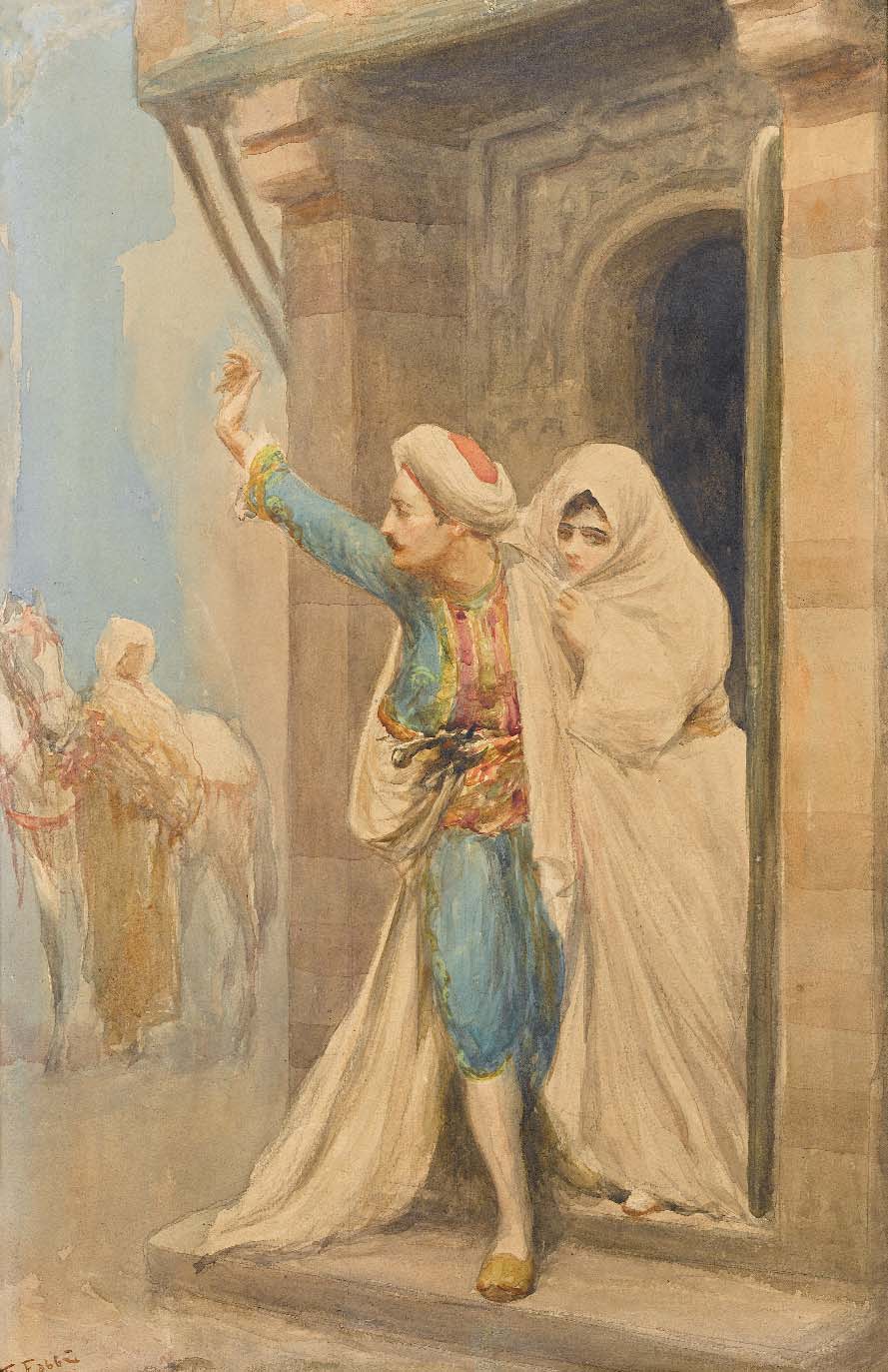
Girl Abduction as a Marriage Practice in the Context of Family Sociology
Introduction
In Turkish culture, throughout thousands of years of history, the family has been considered a sacred institution, serving as the most fundamental building block of society, a solidarity network, and the guarantor of the state’s continuity. The institution of marriage, which is the most important tool for ensuring social unity and solidarity, has undergone various cultural dynamics throughout historical processes. One of the most deep-rooted and striking of these practices is the tradition of “bride kidnapping”. Among ancient Turks; such as in the Altai and Yakut communities, bride kidnapping was practiced as a completely legitimate method of marriage and has been the subject of many Turkish epics like the Epic of Manas(Tezcan 2003; Çelik and Demir 2024). In nomadic Turkic communities, valor and strength were among the most essential values. Therefore, a man kidnapping the woman he loved was seen as an opportunity and a “show of power” that combined love and heroism; proving his courage, strength, and maturity to society(Tezcan 2003). However, over time with the changing of social structures and legal systems; this act ceased to be an indicator of epic heroism. It was replaced by a “practical” yet controversial method developed against patriarchal pressures, economic and intrafamily hostilities. Especially the Ottoman Empire took very harsh measures against girl abduction in order to protect family order and public order. In the laws of the Bayezid II period, it was clearly stipulated that the marriages of those who forcibly kidnapped girls and married them would be broken by the force of the state. And the clergyman who performed this marriage would be severely beaten and his beard would be cut(Temel 2019). During the reign of Suleiman the Magnificent, marriages performed without the permission of the parents were considered completely invalid. Heavy penalties such as rowing or exile were given to those who kidnapped girls(Temel 2019). In the modern penal codes of the Tanzimat period and after this action was subject to strict sanctions such as years of imprisonment, shackles and “virginity compensation” (tazmin-i bikr) that is obligatory to be paid to the kidnapped woman(Temel 2019). Which forms the basis of this qualitative study lies here: how the tradition of bride kidnapping which has a deep-rooted history in Turkish culture is sociologically interpreted. Not merely as a judicial “crime”, an economic “necessity”, or a pragmatic marriage strategy. The core problem is the failure to understand the asymmetrical power relations underlying the act and how the patriarchal structure constantly reconstructs itself through new modes of reproduction via these practices. In accordance with the transformative and critical framework of qualitative research Critical Ethnography and Secondary Analysis. The purpose of this study is to understand the deep social and economic dynamics underlying the act of bride kidnapping, rather than judging it solely as a violation of public order. In this context, the research will focus on the bride kidnapping techniques identified by sociologist İbrahim Yasa through the lens of Feminist Theory. The study aims to solven the cultural boundaries of the act and reveal how patriarchy masquerades as an alternative marriage strategy to sustain its dominance and manipulate women’s consent. With this qualitative methodology, we had to ask one main question and alt question: • Central Question: How do bride kidnapping actions, in the context of both consensual and forcibly applied types, function to ensure the continuity of the patriarchal system? • Sub-question: How does the intersection of biological, religious, and cultural dynamics shape marriage practices and manipulate women’s consent within these asymmetrical power struggles?
Research Methodology
Considering the ontological assumptions and epistemological foundations of the research the methodological setup of the study is prepared. This study adheres to the qualitative research tradition. It is designed as a secondary analysis in which existing anthropological, historical and sociological texts are reinterpreted. The study also adopts the principles of critical ethnography, which offers a transformative perspective against unjust structures that question gender-based power systems, domination and inequality. The main purpose of the research is to deliberately select texts that will provide rich information to the study. In this context, Ottoman court records (istintaknames), historical documents and academic field reports (especially the works of İbrahim Yasa) were included in the analysis by purposeful sampling method. The analysis process of the obtained data follows a spiral structure that progresses from general to detail. The examined texts will first be decomposed into basic information categories with open coding. Then, these themes, which emerge by moving on to the axial coding stage, will be placed in logical relationships around the central concept of “patriarchal domination”. Finally, the theoretical framework of the research will be created through these relationship networks with selective coding. I was the main subject who collected and interpreted the data. According to that, ı have presented a transparent and reflexive evaluation to the reader by including my stance against the cultural norms, patriarchal structures and marriage practices examined, my sociocultural background and possible prejudices in the text.
Literature Review:
Family and marriage institutions, which form the basis of social life have undergone great transformations in the historical process. In ancient nomadic communities such as the Altai and Yakut Turks, kidnapping was accepted as an epic marriage ritual. In nomadic culture, bravery and courage have been the most essential values. A man’s kidnapping of the woman he loves has been an epic show of power that combines love and heroism. It has been engraved in many cultural codes, including the Epic of Manas. However, this epic action has changed shape with major sociological ruptures. On the axis of feminist and critical theory, girl abduction (ala kaçuu in Kyrgyz expression) has turned into a tool of domination in which women’s consent is ignored. One of the biggest breaks in this transformation took place during the Soviet Union period. Soviet party organizations defined girl abduction, bride price and underage marriages as exploitation of women. Afterwards, they tried to save women from this system by forming women’s committees in cities and kolkhozes. Surprisingly young people sometimes used this act as a symbol of “independence” against parental pressure and party authority. In Kazakh culture, today’ s practice of Qız Almak Qaşuv emerged later as a traumatic survival strategy rather than old roots. During the great famine that caused the death of millions of Kazakh Turks in the 1930s it became a necessity invented by the poor people who wanted to get rid of bride price and wedding expenses(Ünal 2024). When the practice of ala kachuu in today’s Kyrgyz society is examined, it is seen that the patriarchal system reproduces itself not only through men but also directly through the elderly. When a young girl who was kidnapped against her will is brought to a man’s house, a heavy psychological domination is put into effect rather than physical violence for break her resistance. Bread is placed on the threshold of the house (bosogo), and an old woman sits on the doorstep and challenges the girl by saying “Slaughter bolson, crow from the horse” (If you want/have the courage, step on me and step on me). The young girl, who is made to believe that crossing that threshold by trampling on the old woman will bring a lifelong curse. Systematically surrendered by the society’s discourses such as “Taş tüşkön cerinde oor” (The stone is heavy where it falls) and “The place where the wheat will go is the mill, the place where the girl will go is the husband”. The head of the woman covered with an “ak cooluk” (white headscarf) and this non-consensual act is legitimized by society. A similar socio-cultural dynamics in Central Asia were experienced in the changing social structure of the Ottoman Empire. In the classical period, the Ottoman Empire met the kidnapping acts that disrupted the public order and shook its own central authority with harsh sanctions. In the laws of the Bayezid II period, it was ruled that the marriages of those who kidnapped girls and forced marriages would be broken by the force of the state and the clergyman who performed this marriage would have his beard cut off and beaten severely. Because of the keep the institution of marriage under strict control the state intervened in some flexibilities of the Hanafi sect with the fatwa of Ebüssuud Efendi in the 16th century. Deemed marriages without family permission invalid. At that time, criminals were given very severe corporal punishment such as rowing in galleys or exile(Temel 2019). With the Tanzimat period, “equality and rule of law” came to the fore in Ottoman law. With the modern penal codes enacted in 1840, 1851 and 1858, corporal punishment was replaced by modern sanctions such as imprisonment shackles and compensation imposed on the perpetrator in case of violation of the virginity of the woman . In addition, the state tried to restrict the bride price and excessive wedding expenses; it aimed to both support population growth and encourage marriage. As a feminist analysis will reveal; This prohibitive legal attitude of the state has often been ineffective in the face of the power of patriarchal practices. Families have resisted receiving bride price, not ceasing to see their daughters as a “workforce” or a “traditional source of income”. Unfortunately, it has become inevitable for the patriarchal mentality to dominate the woman’s body again in its favor by using the gaps in modern law. Although the 1858 Penal Code stipulated heavy prison sentences and shovel penalties for girl abduction cases resulting in rape, the phrase “iktizâ-yı şer’iyyesi gibi” (implementation of sharia requirements) in the law created a great legal gap. Court officers and families often forced the woman whose virginity was broken to marry her rapist on the grounds that her honor was contaminated.Tthe courts released the perpetrators because these marriages took place. So, both in the rituals produced by the psychological pressure of old women in the Kyrgyz/Kazakh steppes and in marriages established over “honor” and “legal loopholes” in the Ottoman courts, the mechanisms of the rule of law and social norms were not enough to break the domination of the patriarchal system. On the contrary, it has paved the way for this system to constantly reproduce itself under new covers.
Conceptual Framework and Data Set:
In this section, ethnographic fieldwork conducted by İbrahim Yasa in rural Turkey is utilized, blending the and etic perspectives. The practices are evaluated in two main groups: Group A: Consensual Elopement Practices and Apparent Will Here types are examined where the woman is thought to play an active role but which are shaped by the coercion of the patriarchal system in the background: • Mutual Elopement (Kaçışma): It is a situation where the girl and the boy run away together by agreement without resorting to any force. This technique is usually a common action used by young people because the families of the parties do not allow marriage due to patriarchal pressure, or because they want to avoid economic burdens such as heavy wedding expenses and bride price. • Following / Going After (Peşe Gitme): The woman runs away with the man voluntarily, taking a stand against her family’s decision. The event is carried out at night so that no one can prevent it; the woman leaves the house at dawn, preparing her bundle, meets the man waiting for her, and follows him. • Settling-in (Oturakalma): The woman goes directly to the man’s house and settles down. This method, resorted to by girls who are not given to the young man they love or who suffer from poverty, is done at the expense of disregarding honor and dignity. İbrahim Yasa defines this technique as “the symbolic abduction of the man by the woman,” where the situation is accepted for fear that if the girl is rejected, the family will gain enemies. • Fake / Staged Abduction (Yalancıktan / Düzmece Kaçırma): In this technique, seen in some cultures like the Kyrgyz society (with roots dating back to the Oghuz Turks), the act is “staged” with the direct agreement of the families . The main purpose is to avoid heavy wedding expenses and economic burdens. Group B: Involuntary (Forced) Kidnapping Practices and Domination These are the types where male domination over the woman’s body and decision is established directly through violence: • Forced Abduction (Derdest / Zorla Kaçırma): It is the abduction of a girl or woman without her will and approval, by force, threat, or various deceptive methods. This act, usually carried out through violence and coercion when the girl’s family does not approve of the marriage. The most traditional and dangerous type of kidnapping, in which the will of the woman and her family is completely ignored. • Pulling the Girl (Kız Çekme): In this method, applied in regions like Rize, the male side, unable to get the girl, suddenly and forcibly “pulls” and takes her away while she is at the mill, cutting grass, or working collectively. This act, where the kidnappers are armed, may sometimes be pre-planned (staged) if it is a marriage approved by the family elders, and in this case, the girl’s screaming is only a part of her role. • Dezmal Abduction: In this technique,Hakkari, instead of physically kidnapping the girl her headscarf (dezmal) is forcibly untied and taken at the fountain or on the road. A girl whose headscarf is snatched is considered to have been violated and actually kidnapped. This situation forces families into a compulsory agreement. Before critically analyzing the phenomenon of bride kidnapping, it is necessary to present the traditional and functionalist motives frequently cited in the existing literature. The overt reasons that drive individuals to this practice are generally classified into three main categories: economic, social, and biological. Economic Reasons • Bride Price (Başlık Parası ): Despite the inadequate financial situation of the groom’s family, the bride’s family’s demand for enormous high amounts of bride price and various mandatory gifts is the primary catalyst that pushes men to kidnap women either by force or mutual consent. However, this action sometimes costs the man’s family much more during the reconciliation process for the release of the arrested young man. The bride’s family may significantly increase the bride price as a punitive measure. • Heavy Wedding Expenses (Ağır Düğün Giderleri): The prolonged nature of wedding ceremonies, the mandatory gifts to close relatives, and the massive wedding banquets to which neighboring villages are invited severely shake the groom’s side economically. For families or youths who cannot afford these expenses, the act of kidnapping is preferred as a “cost-free” alternative. Social Reasons • Domestic Conflicts and Stepfamily Issues: Stepfamily problems, which usually begin with the death of a parent and the remarriage of the surviving spouse, lead to severe domestic discord. The disruption of family balance turns into a structural push factor, encouraging young people who desire a better and more peaceful life to elope or run away from home. • Hostility Between Families and Villages: When normal marriage is impossible for the youth of families who are enemies or involved in a blood feud, the parties can only unite through kidnapping. In some cases, forced abductions occur without any affection, purely for the sake of taking revenge and staining the honor of the rival family. • Encouragement of the Public and the Environment: When village residents, relatives, or individuals who previously married by elopement sense such an intention, they actively encourage the parties. The provocation of both the man and the woman sometimes emerges as an effort to create vitality or excitement in the stagnant routine of the village. Biological Reasons • Passing the Age of Marriage: Girls or boys who are passing the traditional age of marriage and fear losing the chance to marry in their local area consciously create opportunities to elope or be kidnapped. • Sexual Needs and Lust: The inability to satisfy sexual needs is cited as one of the obvious biological triggers why individuals resort to bride abduction. While the prevalence of lustful abductions draws attention, these biological urges can sometimes cause even married individuals to run away with each other. • Pregnancy Status: Especially in structures like the Kyrgyz society, the fact that a girl becomes pregnant before marriage finds its place in the literature as a compelling biological reason to justify bride kidnapping.
Analysis and Interpretation:
While traditional literature often attributes bride kidnapping to simple causes, a transformative and critical framework requires analyzing the economic, social, and biological reasons underlying these practices as mechanisms through which patriarchy reproduces itself. One of the most visible catalysts for both forced and consensual bride kidnapping is the marriage economy. The inability of the groom’s family to afford the high “bride price demanded by the bride’s family coupled with the heavy financial burden of traditional wedding expenses (extended ceremonies, mandatory gifts to relatives), pushes young mentowards kidnapping as a “cost-free” alternative. However, from a critical perspective, the bride price is not merely an economic transaction; it is the commodification of the woman’s body and labor. When the patriarchal system imposes such monetary barriers, consensual elopement (kaçışma) ceases to be a true act of free will. Instead, it becomes a desperate survival strategy for women who are cornered by the threat of being sold to the highest bidder or remaining unmarried. Social factors such as inter-family hostilities, stepfamily conflicts, and the direct encouragement of the community play a massive role in normalizing these abductions. The most striking aspect of the social dimension is how patriarchal power is exercised not just by men, but through by older women. As seen in the Kyrgyz ala kachuu practice when a kidnapped woman resists; older women place bread at the threshold of the house and threaten her, “Step over me and leave if you dare” (Kıyın bolson attan ötüp ket). She is psychologically paralyzed by the belief that leaving will bring a lifelong curse. The community breaks her will with sayings like “A stone is heavy where it falls” (Taş tüşkön cerinde oor), proving that what appears to be “resignation” or “consent” is actually the result of systemic psychological violence. Some sociological texts bride kidnapping is superficially attributed to biological reasons, such as “passing the age of marriage,” “unmet sexual needs,” or premarital pregnancy. However, a critical ethnographic approach rejects this biological reductionism. “Passing the marriage age” is not a biological clock, but a socio-cultural pressure mechanism designed to marginalize unmarried women. Furthermore, when a woman is kidnapped due to premarital pregnancy, this is not a purely biological necessity. It is a cultural and religious imperative produced to escape the severe punishments (including death or honor killings) imposed by the patriarchal “honor” culture. Therefore, biological realities do not independently cause bride kidnapping, they intersect with religious and cultural systems of oppression that leave women with no choice but to surrender to the abduction in order to acquire a legitimate status in society.
Conclusion
Through a critical secondary analysis of İbrahim Yasa’s classifications, this study reveals that bride kidnapping is not a romantic rebellion or a mere economic necessity. Rather, it is a desperate survival tactic within a system that systematically denies women legitimate and autonomous channels for mate selection. The central conclusion of this research is the profound resilience and adaptability of patriarchy. The findings demonstrate that despite radical shifts in geography, religious beliefs, legal frameworks, and social structures across centuries, patriarchy continuously metamorphoses and reproduces itself to sustain its domination over the female body and will. For instance, when the Ottoman state attempted to ban the bride price and modernize penal codes, the patriarchal order ingeniously exploited legal loopholes to force violated women into marriages with their captors(Temel 2019). Similarly, when Soviet policies strictly prohibited these customs, patriarchy simply adapted; it resurged in post-Soviet Kyrgyzstan as ala kachuu, where older women are now used as agents of patriarchy to enforce psychological submission through dogmas like “a stone is heavy where it falls” (Taş tüşkön cerinde oor)(Ünal 2024).Ultimately, transformations in state laws, religions, or social structures do not automatically dismantle unjust systems. Bride kidnapping proves that patriarchy is not a static relic of the past its highly adaptable, asymmetric apparatus of power. It constantly updates its methods of manipulating consent and commodifying women, ensuring its absolute survival across any era or culture.
References:
• Cin, H. (1974). Marriage in Islamic and Ottoman law. Ankara University Faculty of Law Publications. • Çelik, F., & Demir, E. (2024). The tradition of bride kidnapping among Kyrgyz and Kazakh Turks. International Journal of Volga-Ural and Turkestan Studies (IJVUTS), 6(2), 264-278. • Deringil, S. (2017). Conversion and apostasy in the 19th century Ottoman Empire (A. Anadol & T. U. Belge, Trans.). Iletisim Publications. • Ekmekçioğlu, L. (2014). Kidnapping girls, rescuing girls: Armenianness and Muslimness in Istanbul during WWI and the Armistice years. Society and Science (Toplum ve Bilim), 129, 223-256. • Güvenç, B. (1993). Remnants of traditions: Bride price, berdel, bride kidnapping, co-wife, and cousin marriage. Journal of Women’s Studies, 1, 43-48. • Peirce, L. (2012). Honorable and dishonorable kidnapping: Rulers, bandits, and heroes in the Ottoman world (N. Demirkol, Trans.). Kebikeç Journal, 34, 41-60. • Temel, M. S. (2019). Bride kidnapping in the Ottoman Empire (1839-1908): State, communities, and modernization (Unpublished master’s thesis). Istanbul 29 Mayis University, Istanbul. • Tezcan, M. (1998). The tradition of bride wealth in Turkish culture: A cultural anthropological approach. Ministry of Culture Publications. • Tezcan, M. (2003). Anthropological analysis of bride kidnapping traditions in Turkish culture. Journal of Social Policy Studies, 6(6), 1-8. • Toroslu, N. (1974). Abduction of women. In A. Güriz & P. Benedict (Eds.), Studies on Turkish law and society (pp. 413-467). Turkish Development Foundation Publications. • Ünal, A. (2024). Background of bride kidnapping (ala kachuu) as a social problem in contemporary Kyrgyz society. Journal of Selçuk Türkiyat, 63, 155-178. • Yasa, İ. (1962). Bride kidnapping traditions in Turkey and some related administrative issues. TODAIE Publications.
// Yorumlar
Yükleniyor...