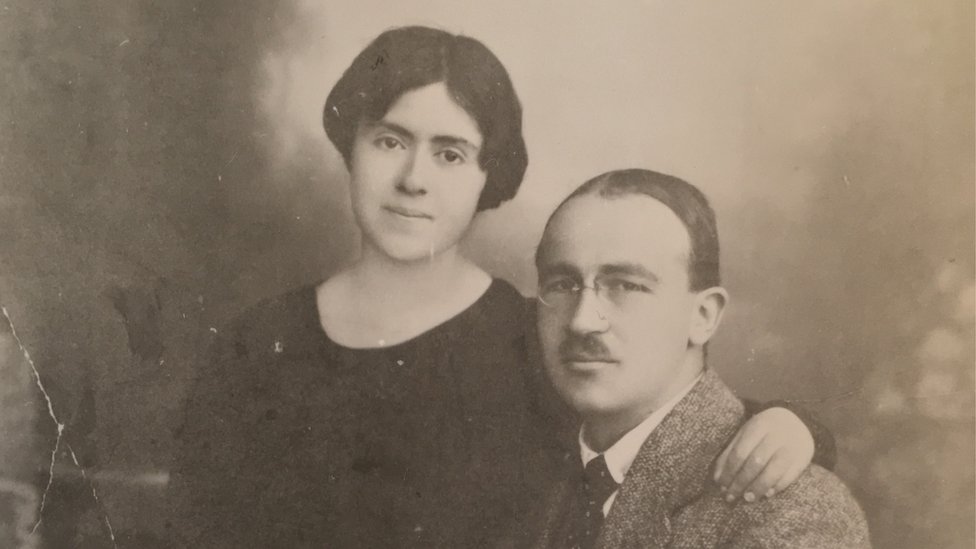
About Sabiha Sertel
I. First Woman Journalist: Why Sabiha Sertel is important in Turkish Politics?
Sabiha Sertel, the first female journalist of the Republic of Turkey, is known for addressing issues concerning women of her time through her writings. While women began to question their place after the industrial revolution, the questioning of the roles of women in the Ottoman Empire took place during a period when looking to the West as an example was viewed positively. The traditional environment was questioned, and women’s social life gained importance. Sabiha Sertel’s family structure (her childhood questioning household chores, her parents’ relationship, her marriage to someone outside the community) and the community she belonged to (Dönme) enabled her to question these issues in depth.
II. What is Situation of Ottoman and Later Turkey?
Sabiha Sertel faced various challenges in Turkey after the declaration of the Republic. She tried to convince her readers that the new Republic was more than just the right to vote and overthrow the Sultan. The Ankara regime adopted an oppressive policy to establish order, suppress differing opinions and voices, and overcome the rebellions of the period. Her husband and Sabiha Sertel were among those who faced these repressions firsthand.
Sabiha Sertel is a name that will always be associated with Turkish female journalism as she was the first to face trial in court for her writings after the Republic established. The critical pen of Sabiha Sertel was instrumental in scrutinizing the extent to which the Republic’s ideals being realized and how they received by the public, especially in Resimli Ay and the Cumhuriyet newspaper of the time. This behavior often brought her to the courthouse.
What is her political perspective, according to what?
She describes this period in a later interview as follows: “One of the events that first inspired me to read was the era and environment I lived in… My older brother was a member of the Young Turks organization in Thessaloniki, which opposed the autocracy of Abdulhamid. I would secretly read the hidden works he brought home, the poems of Namık Kemal, the writings of Ziya Paşa. The first seeds of my rebellious and revolutionary spirit belong to this period.”
Thanks to Halide Edip, Sertel become Turkey’s first social services specialist also the education she received in the United States during her university years led her to become interested in socialism and to base her writings on this ideology.
Free Republican Party came to the fore as an attempt to transition to a multi-party system. During this period, Sabiha Sertel ran as an independent candidate for the Istanbul municipal council and outlined her goals in a program titled “Why Am I Running for City Council?” published in 1930.
Sertel stressed that she did not represent any party, but rather, the working class, the poor peasants, the small trades people, and the civil servants. The most basic point in her reasoning was that the people’s power should dominate the state’s power, and towns and governments should be chosen by popular votes. Besides, she maintained that voting should be universal, single-step, and free from party domination.
Feminism and Workers: Sabiha Sertel fell out with the Ottoman authorities due to her anti-Greek stance in the magazine “Büyük Mecmua,” an important newspaper of the time where her husband Zekeriya Sertel also wrote, and her identity as a dissident writer began during this period. She wrote her first feminist articles in the newspaper, with women’s right to vote being the primary subject of her writings. Another theme she embraced in her writings was the concept of “namus.” This concept, which was constantly on everyone’s lips due to the social structure and ethical dimension of the time, was dangerous enough to undermine women’s place in society. Her articles in Sevimli Ay magazine, written under the pseudonym “Cici Anne” and her advice columns would shift the delicate balance of “namus” and women’s roles in society to a more flexible ground. Her critiques regarding class and women’s rights led to a trial in 1924, where she faced the charge of undermining the regime and inciting class conflict through a piece in Cumhuriyet that condemned a woman for leaving her child and pointed out the absence of social support. However, she released as her language deemed severe but not evil. Another trial followed an article on contraception, written at a period when the government was implementing a pronatalist population policy. Her time in the United States led him to participate in field activities, she became one of the founders of the Turkish Mutual Aid Society, which organized Turkish workers who had migrated from Anatolia to the United States and aimed to find solutions to their problems. This society even had its own publication called Birlik.
III. Literature Review: Anthropoligical Perspective of “Dönme Society” to the Secular Turkish Republic:
The term Dönme refers to Ottoman Jews who, in the seventeenth century, followed Shabbatai Tzevi as the Messiah and developed religious practices combining Jewish Kabbalah and Islamic Sufism, particularly in cosmopolitan centers such as Thessaloniki, with strict internal rules including endogamous marriage. Sabiha Sertel, who was of Dönme origin and likely connected to the Kapanî group, deliberately distanced herself from this identity. This is evident in her 1915 marriage outside the community, her description of the Dönme community as a restrictive “circle” in a Yedigün interview, and her assertion in Sebilürreşetçıya Cevap that nationality should be defined by language, culture, consciousness, and law rather than lineage. These examples show that Sertel consciously positioned herself outside the Dönme identity, making her significant from an anthropological perspective. Dönme figures such as Dr. Nâzım played important roles in the CUP and the 1908 Constitutional Revolution that lead by CUP created two major ruptures leading to exclusion. The first was the Islamist backlash after the 1909 deposition of Abdülhamid II, which framed Dönme, Jews, and Freemasons as conspirators. The second was the rise of racist identity politics shaped by Russian anti-Semitism and emerging Turkic-Muslim nationalism. Marginalized in both Greece and Republican Turkey, the Dönme were discredited through their origins and, after the 1923 population exchange, faced serious difficulties during the Republic’s nation-building process, especially in debates over citizenship and “true Turkishness.” Sabiha Sertel, despite clearly expressing her views, also suffered from exclusion due to her Dönme background, beyond her role as a dissident journalist.
Conclusion:
Sabiha Sertel played a important role in political history not only as Turkey’s first female journalist but also as an intellectual who challenged the ideological boundaries of the early Republican era. Shaped by her American education and socialist background, her attitude that criticize the regime’s oppressive ruling style and her idealist worldview that sees people’s poverty showed that positioning popular sovereignty against state authority. She managed to keep women’s rights and workers’ issues on the agenda despite the repressive policies of the time.
Bibliography:
• Çatal, Barış. “Sabiha Sertel (1895–1968).” Atatürk Ansiklopedisi. Atatürk Araştırma Merkezi, 28 Mart 2024. Erişim tarihi 20 Kasım 2025. https://ataturkansiklopedisi.gov.tr/detay/1755/Sabiha_Sertel_(1895-1968). • Shissler, A. Holly. “‘If You Ask Me’: Sabiha Sertel’s Advice Column, Gender Equity, and Social Engineering in the Early Turkish Republic.” Journal of Middle East Women’s Studies 3, no. 2 (Spring 2007): 1–30. Duke University Press. https://www.jstor.org/stable/10.2979/mew.2007.3.2.1. • Criss, Nur Bilge. “The Dönme: Jewish Converts, Muslim Revolutionaries and Secular Turks.” Turkish Studies 11, no. 2 (2010): 294–298. https://doi.org/10.1080/14683849.2010.483873. • Türk, Emine Bilgehan. “Türk Basın Tarihinin İlk Kadın Yüzlerinden: Sabiha Zekeriya Sertel.” Karadeniz İncelemeleri Dergisi, no. 27 (Güz 2019): 261–278. • Shissler, A. Holly. “Womanhood Is Not For Sale: Sabiha Zekeriya Sertel Against Prostitution and For Women’s Employment.” Journal of Middle East Women’s Studies 4, no. 3 (Fall 2008): 12–30. Duke University Press. https://www.jstor.org/stable/10.2979/mew.2008.4.3.12.