Green Colonialism
I. Introduction
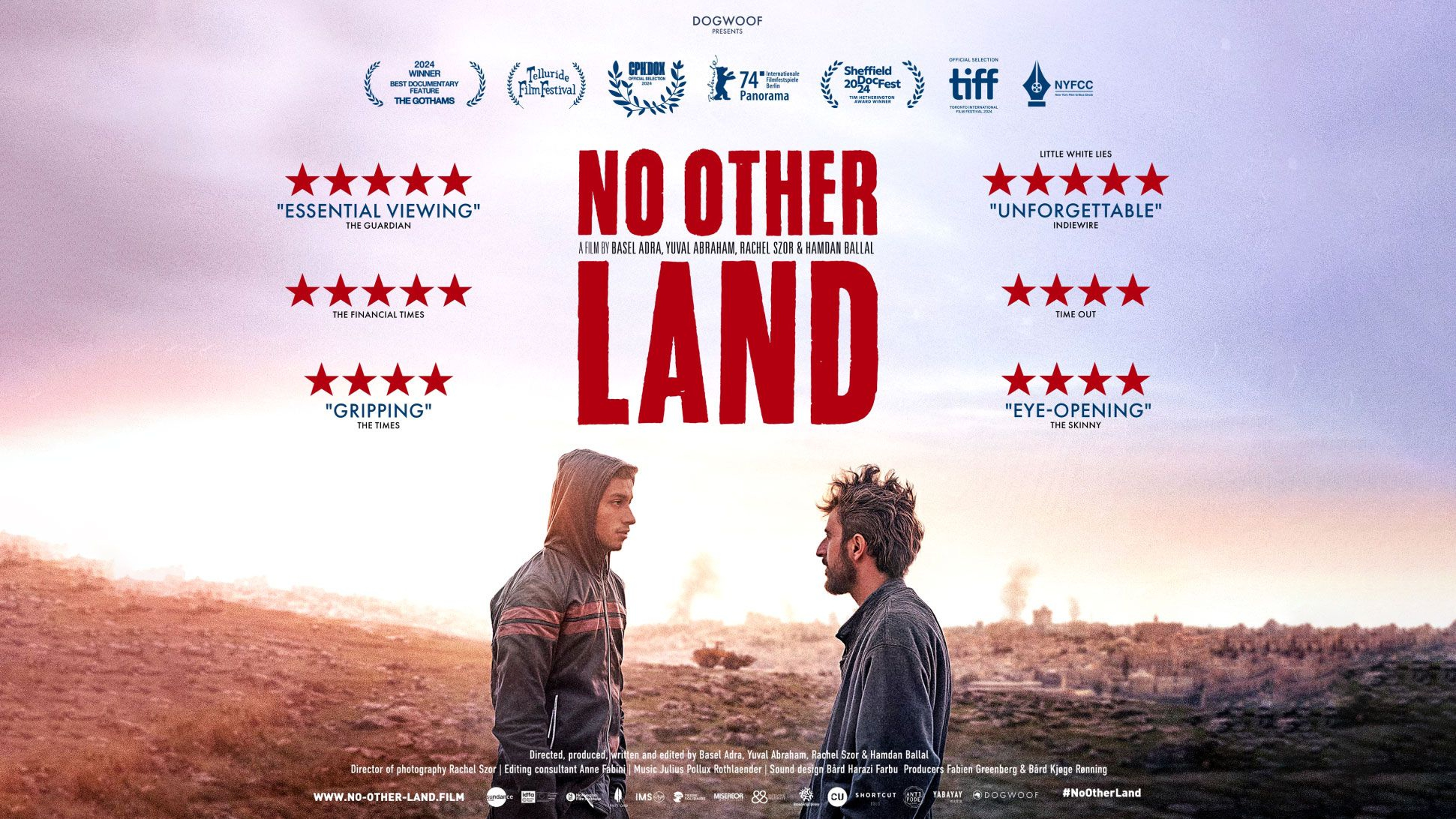
Beyond destroying human life and infrastructure, wars and armed conflicts also cause significant damage to the environment, the “silent victim” of modern conflicts. The United Nations Environment Programme (UNEP) has determined in its assessments since 1999 that conflicts disrupt ecosystems and threaten the livelihoods of communities dependent on natural resources. For example, it has been reported that conflicts in the Gaza Strip have brought groundwater resources to the point of collapse and threatened agriculture. This research will examine the ecological effects of war in the context of international law and environmental sociology, focusing particularly on the Israeli Palestinian conflict through the visual and sociological testimonies presented in the film No Other Land (2024).
II. Literature Review
The theory of environmental racism essentially refers to the practice of dumping environmental waste and pollution in the living spaces of specific, oppressed ethnic groups, while ensuring that the oppressors benefit solely from the clean resources in the surrounding area. Sometimes, they go beyond merely taking resources; they practice environmental racism by placing facilities and factories that can harm human health in the living areas of oppressed ethnic groups. European Union sources indicate that Israel has removed polluting factories from its own cities and relocated them to Palestinian territories in the West Bank. The most striking example of this is the Geshuri agrochemical factory, which was closed because it was seen as a threat to Israeli settlers but reopened in Tulkarem (West Bank), demonstrating that Israel shifts the environmental risk (risk of cancer and disease) onto Palestinians while reserving clean air for its own citizens. It emphasizes that this racism is “deliberate,” noting that factories operate when the wind carries pollutants to Palestinians, but are shut down when the wind shifts toward Israeli settlements. International Law and Environmental Protection: Four main areas of law protecting the environment during conflict stand out: International Humanitarian Law, International Criminal Law, International Environmental Law, and Human Rights Law. However, there are serious gaps in these protection mechanisms: Additional Protocol I to the 1949 Geneva Conventions prohibits “widespread, long-term, and serious” harm; however, for a violation to occur, these three conditions must be proven simultaneously, which is practically impossible. Most legal regulations are designed for international conflicts (between states); however, most conflicts today (such as complex situations or internal conflicts, as in the Israeli-Palestinian context) may not fully fall within this scope, and environmental protection is weaker in these situations. UNEP reports show that deforestation, wildlife loss, and water pollution are directly linked to conflicts in regions such as Afghanistan and Ivory Coast. Furthermore, the exploitation of natural resources, referred to as “conflict resources,” finances and prolongs wars. The situation in Gaza, with the contamination and depletion of groundwater, is an example of how environmental damage translates into human rights violations (the right to life and health).
III. Body Part:
“No Other Land” as a Case Study Directed by Basel Adra and Yuval Abraham, the documentary No Other Land (2024) exposes the systematic destruction taking place in the Masafer Yatta region of the West Bank. The film documents not only a conflict but also the ecological dimensions of a state-sponsored oppression mechanism. The film features scenes of direct ecological destruction, such as the uprooting of olive trees, the destruction of valuable farm animals, and the demolition of homes by bulldozers. These actions can be interpreted as an attempt to erase a people’s roots from the land. The film documents how the police destroy Palestinians’ right to access water and the damage done to water wells. This situation constitutes a violation of international law prohibiting “the destruction of objects essential for the survival of a group (such as water facilities).” While Israeli settlers consume 369 liters of water per person per day, Palestinians consume between 50 and 73 liters, which is below even the minimum limit (100 liters) recommended by the World Health Organization (WHO). Israel controls 90% of Palestine’s groundwater resources, leaving only 10% for Palestinians. The fact that such a basic right to life as water is divided so sharply along ethnic lines (being Israeli or Palestinian) is the clearest example of institutional environmental racism. Underlying the village evacuation issue that brings Basel and Yuval together in the film is the destruction of the ecological balance of the villagers’ harmless living spaces. The declaration of Masafer Yatta as a “firing zone” and the forced displacement of the indigenous population demonstrates that the environment is being used or transformed as a weapon for military purposes. • Waste Colonialism: Dumping the dominant group’s waste on the oppressed group’s land is another dimension of environmental racism. It points out that untreated wastewater and sewage from illegal Israeli settlements (such as Betar Illit) are directly discharged into Palestinian agricultural lands (such as Wadi Foukin and Nahaleen). This practice reflects a colonial environmental policy that views Palestinian lands as a “dump” and disregards the health of Palestinians. • Green Colonialism: Environmental racism is practiced not only through pollution but also through the seizure of indigenous peoples’ lands under the guise of “nature conservation” (Green Colonialism). Israel declares areas where Palestinians live as “nature reserves” or “national parks,” prohibiting Palestinians from entering these lands and farming them. However, legal regulations (such as the 2018 law change) exist that allow Israeli settlers to build in the same areas. The use of environmental protection laws as a weapon to displace an ethnic group (Palestinians) corresponds to the concept of “Green Colonialism” in sociology. This situation is identical in logic to the practice of expelling people through the declaration of a “firing zone” as depicted in the film No Other Land.
IV. Sociological Perspective:
Apartheid and the Environment The film’s narrative also reveals the sociological dimension of environmental injustice. The distinction between green (Palestinian) and yellow (Israeli) license plates symbolizes not only freedom of movement but also inequality in access to natural resources and space. Incidents documented in the film, such as the theft of a generator belonging to Palestinians by the authorities, show that basic life infrastructure is systematically targeted. This situation suggests that environmental destruction is used not only as a physical means but also as a tool of “ethnic cleansing” aimed at destroying a community’s memory and future. Isaac and Hilal’s (2024) work documents the real-world manifestation of the theory of Environmental Racism in sociology, with Israel managing water resources through an ‘Apartheid’ system and deliberately shifting toxic industries to Palestinian settlements, as exemplified by the Geshuri factory. This situation reveals a systematic inequality in which environmental risks (waste, pollution) are assigned to Palestinians, while environmental benefits (water, clean air) are assigned to settlers.
Conclusion:
In conclusion, the ecological impact of wars is too deep and systematic to be seen merely as “collateral damage.” The film No Other Land concretely illustrates how the environment in the Israeli-Palestinian conflict has been turned into a battlefield through the uprooting of trees, the destruction of water sources, and the dehumanization of the land. Current international law is inadequate in punishing this type of systematic but protracted ecological violence due to the high threshold for “widespread, long-term, and serious” damage. From an environmental sociology perspective, the protection of natural resources is not only an ecological imperative but also a fundamental condition for building peace and protecting human rights; for without a natural environment that provides livelihoods, lasting peace is impossible. In future peace processes, environmental remediation and the equitable sharing of natural resources must be central to agreements.
Bibliography:
• Catania, C. (2025). No Other Land (2024), by Hamdan Ballal, Yuval Abraham, Basel Adra, Rachel Szor .JACLR: Journal of Artistic Creation and Literary Research, 13(1), 141-144., Hulme, K. (t.y.). The ILC’s work stream on protection of the environment in relation to armed conflict. (University of Essex, School of Law)., Isaac, J., & Hilal, J. (2024). Environmental and Climate Justice in Palestine. American Journal of Climate Change, 13, 251-280. doi:10.4236/ajcc.2024.132014, United Nations Environment Programme (UNEP). (2009). Protecting the Environment During Armed Conflict: An Inventory and Analysis of International Law. United Nations Environment Programme.,